| 96 kHz.org |
| Advanced Audio Synthesis |
|
optimized sawtooth waves for music applications This page shows some ways to create
sawtooth style waves in music synthesizers. The sawtooth wave is one
of the fundamental waveforms in electronic sound generation. It contains
all integer overtones (harmonics) and therefore sounds very clear and
pressureful. In synthesizers, it serves as the basis for fat basses
and lead tracks, as well as for pad sounds for string instruments. Depending
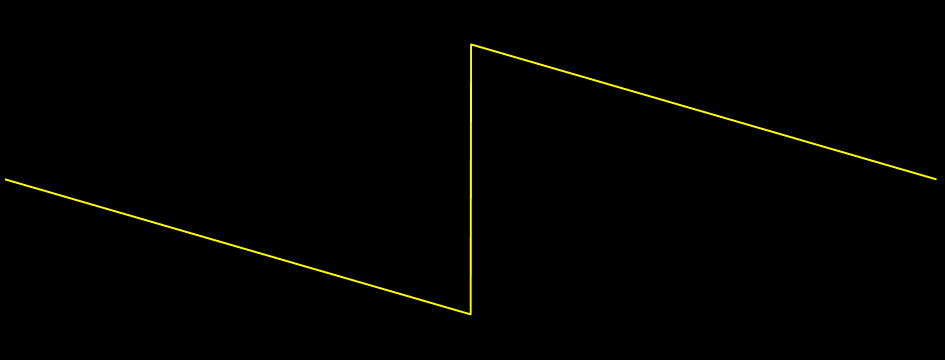
on the filtering, it can sound bright, thin, or slightly aggressive. flat sawtooth wave
Unlike the triangle wave, the sawtooth wave contains both even- and odd harmonics. The fundamental has the full initial amplitude. The first overtone, at twice the frequency, has only half the amplitude. The second overtone has three times the frequency and only one-third of the amplitude—with an alternating sign for each of the terms. Musically speaking, the first overtone is the octave, the second is the fifth within that octave, and the next is another octave. The fifth note then jumps to the fifth in the following octave again.
Typically the wave is generated with an easy
equation using just a counter or the phase vector itself. However the
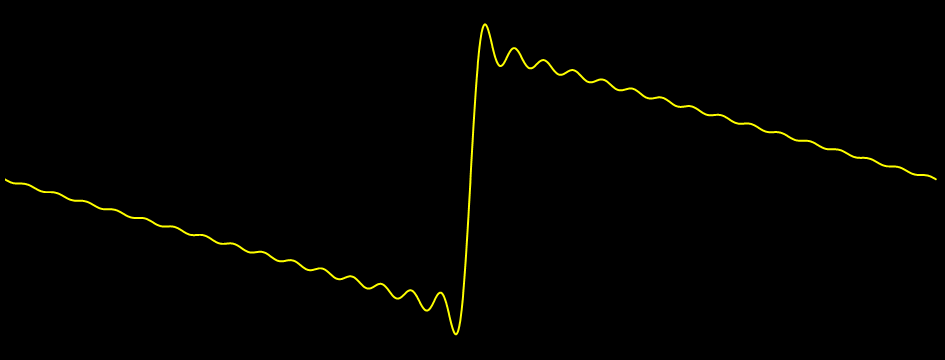
sound can be changed in applying a band limitation:
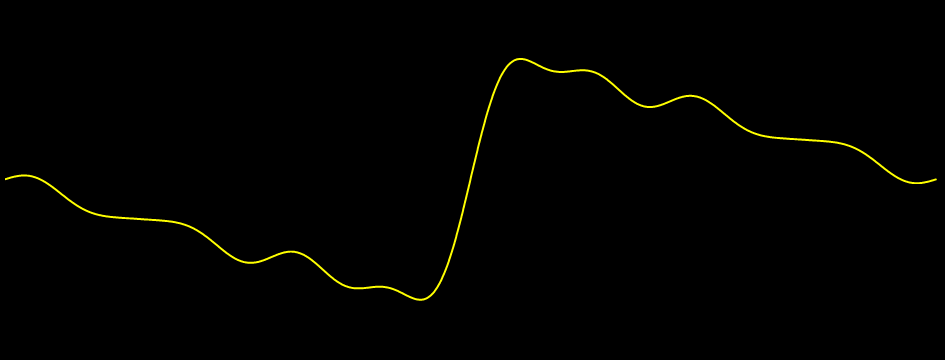
Such a band limited waveform is much better for
digital systems because together with the limited sampling rate, it
does not generate aliasing, which is a major problem in digital synthesizers.
If you can limit the number of frequencies, you’ll avoid creating any
that might cause problems later on. This also ensures that every note
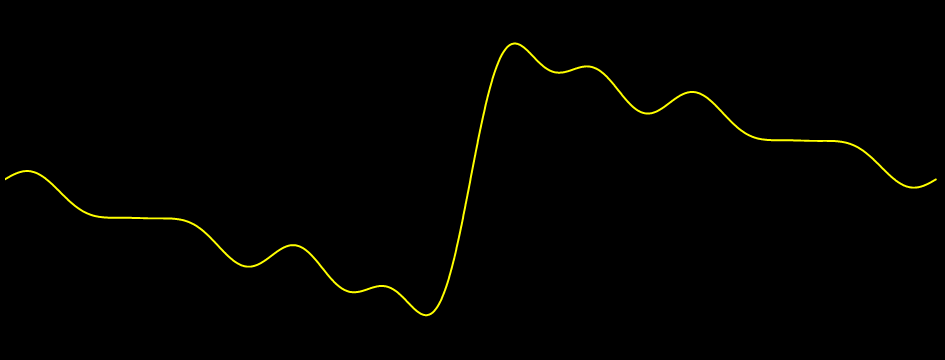
has the same number of overtones. To have a smooth behaviour a soft
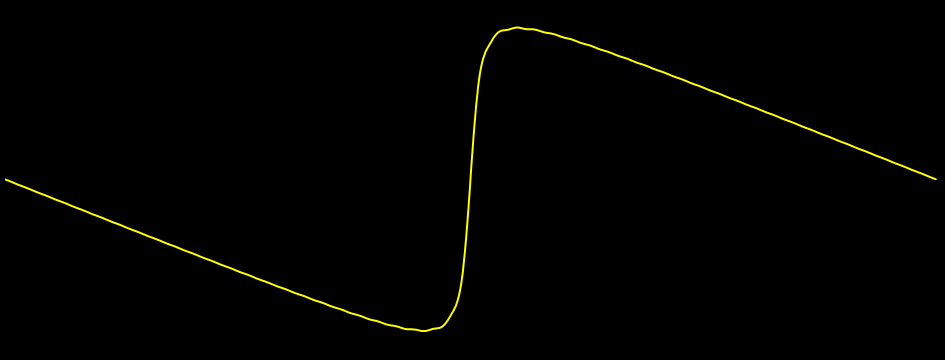
roll off can be applied:
With this gentle roll-off to the amplitudes a
pretty tonal response in the overtones is achieved. The shape reminded
my to a shark fin, so I named the preset like this. It works very well
when mixed with identical waves that are slightly out of tune to create
superimposed waveforms (super saws). However there are still many aggressive
harmonics included which cause aggressiveness when it comes to more
than 3-4 waves.
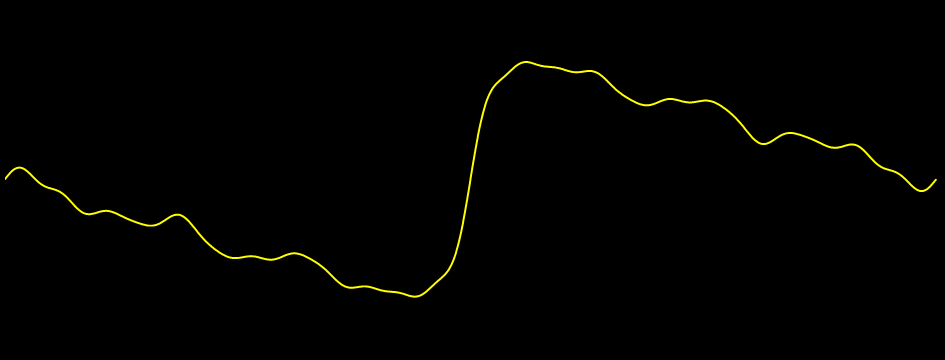
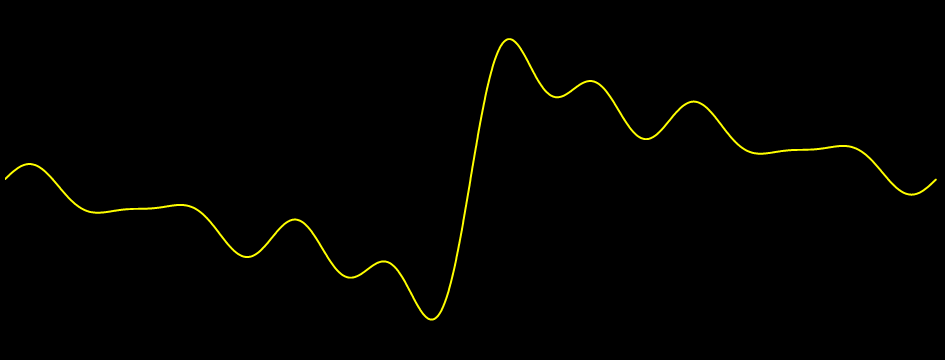
Here only 1+3 octaves and the 3rd + 5th and their first octaves are used together with a roll off. Now evidently smoother with less high frequencies and much more harmonical. And now that the distracting overtones have been
reduced, you can also remove the roll-off function.
Pseudo sawtooth wave with band limitation to
musical harmonics. Read the former article Sawtooth Generation
|
| © 2005 - Jürgen Schuhmacher |