| 96 kHz.org |
| Advanced Audio Processing |
shaped noise generator Digital
noise generation can easily be done with LFSR-registers as well as
in hardware and as in software. This article
shows, how to shape the spectrum accordingly to your needs:
This circuit produces several noise channels which are shaped with indidual equalizers in order to achieve the desired spectrum. The specific profile of the harmonics according to fourrier analysis is taken into account here. The filter designed to limit frequencies to the 5th harmonic while the amount if overlapping of the channels make sure that the harmonics add to a flat profile.
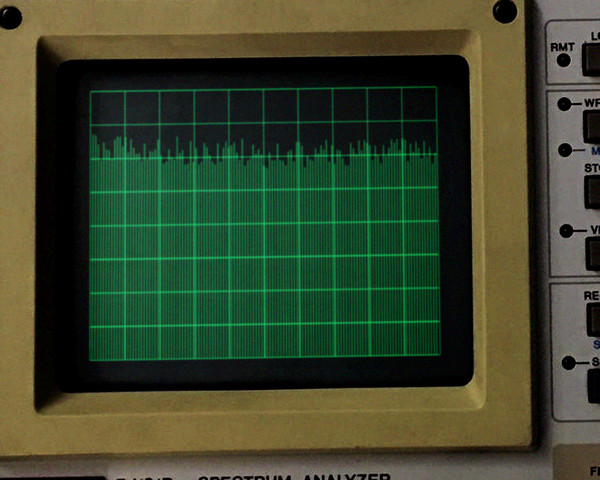
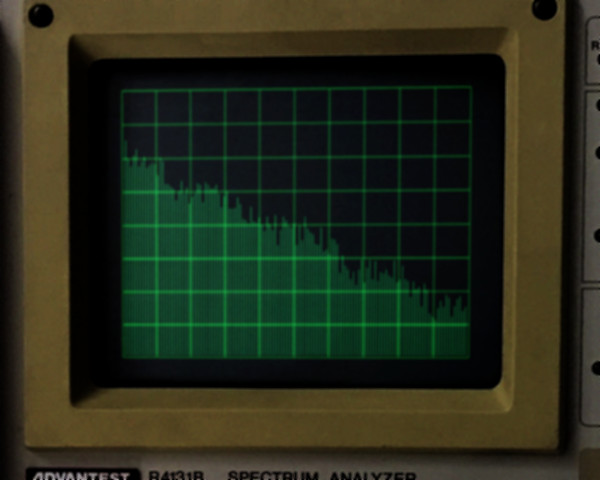
In modifiying the scale factors for the channels, it is possible to aproach the profile to white noise, brown noise and pink noise.
Screenshot of a logic analyser with white noise setting
Screenshot of a logic analyser with pink noise setting See the code here: noiseshapping.c
Conclusion and Summary PLDs can be used to generate versatile noise signals for audio applications.
|
| © 2001 - Dipl.-Ing. Jürgen Schuhmacher |