| 96 kHz.org |
| Advanced Audio Synthesis |
|
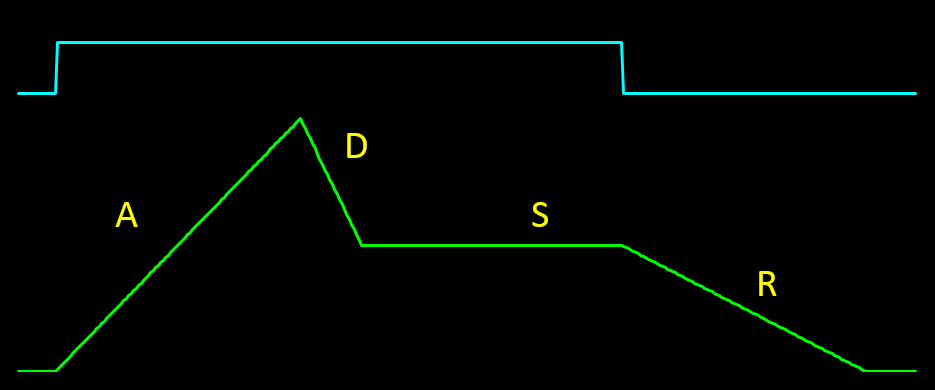
An envelope generator for electronic audio synthesis Common music synthesizers typically use
a classic envelope following the ADSR scheme as introduced in the early
1970tees. There are four phases named Attack, Decay, Sustain and
Release.
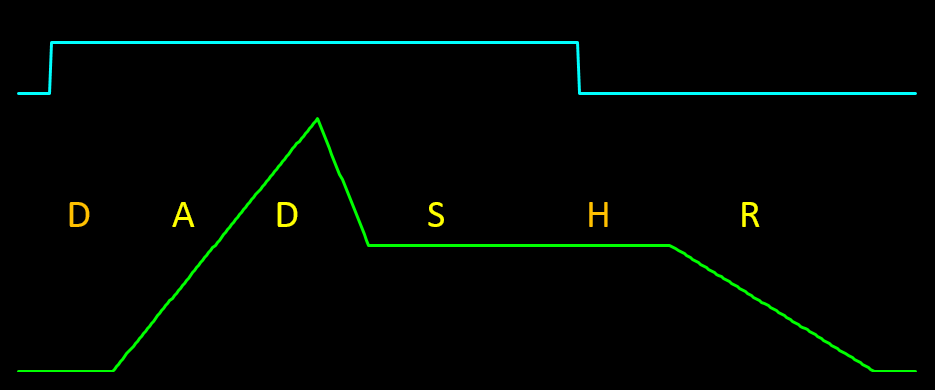
6-stage Version The classic ADSR has been expanded to include
a delay and a hold time. The figure below shows a setting:
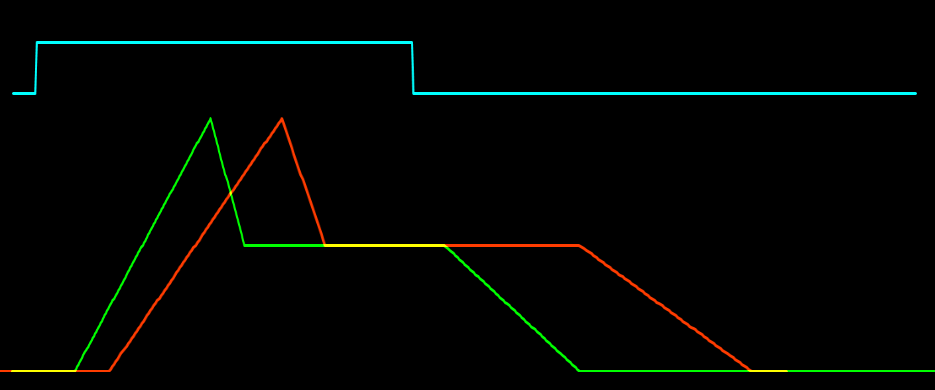
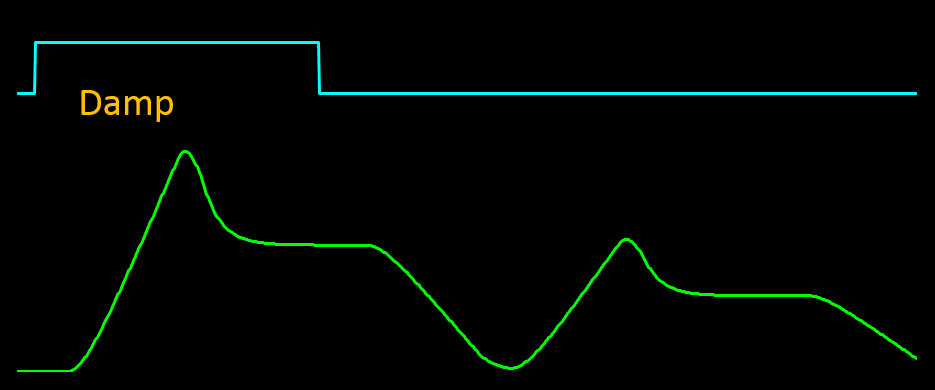
The curve and therefore the sound is delayed after pressing the key and released after another dedicated time after releasing it. This improvement opens up new options for sound design, which is particularly advantageous for electronic sounds used in e.g. trance music. Instead of the simple classic 4-point waveforms highly flexible sound designs are possible then. For example, multiple voices can be layered with a different time delay to mix the voices and fade in between them.
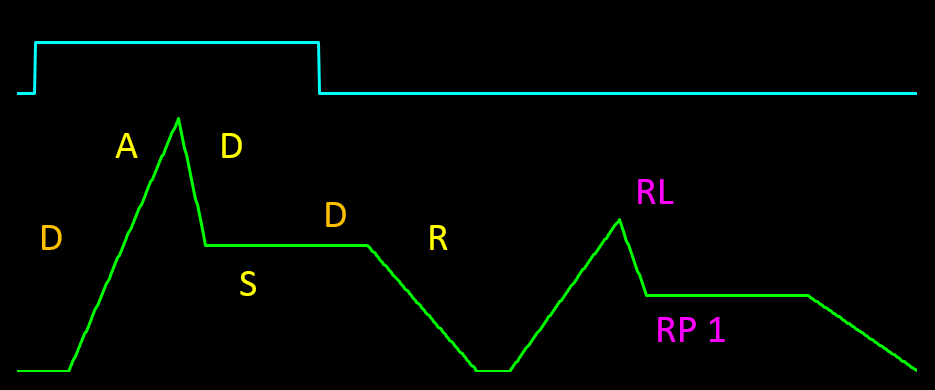
8-stage Version A new approach will be presented here:
an automated repeat function! For the first time, this method makes
it possible to repeat an envelope curve in its entirety, triggering
multiple notes without having to press the key again. This is necessary,
for example, when playing pizzicato on violins or for very fast and
complex drum sounds. Even the sound of machine-gun fire or raindrops
can be generated this way.
The classic ADSR is then used as usual, while
the two additional parameters, PreDelay and Hold, are used in a similar
way to how we know them from EMU sound modules! Their values
are simply reinterpreted as speeds as needed to make them easier to
calculate in digital systems. In the realisation in my Chameleon Synthesizer,
integer based calculation is used. Furthermore I use the character W
for "wait" to distinguish from D = Delay. Get Smooth As a further enhancement, a filter can be applied to the curve to smooth it. Classical IIR-filters are used for this. This results in an even softer transition between the individual phases of the envelope, which, when properly adjusted, brings even more dynamics and life to the sound.
Conclusion and Summary
|
| © 2004 Jürgen Schuhmacher |